Geism: Bringing Retro Softness to Modern Brand Identity
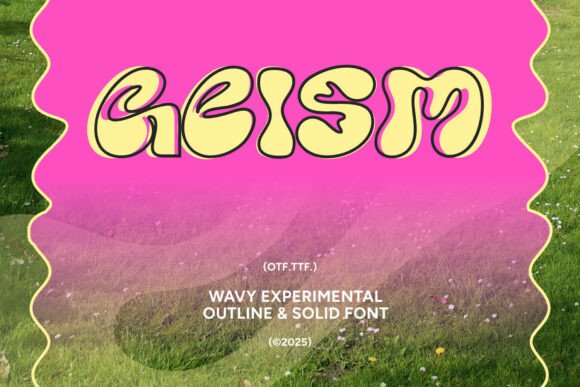
There is a distinct shift happening in visual design right now, moving away from the stark minimalism of the last decade toward something warmer, more tactile, and undeniably playful. Geism sits right at the intersection of this movement. It is a cheerful, wavy display font characterized by soft, blobby curves that manage to feel both nostalgic and contemporary. While many retro revival fonts lean heavily into specific historical accuracy, Geism occupies a unique space between 70s groovy aesthetics and Y2K bubble typography. This hybrid nature makes it an incredibly versatile tool for designers looking to inject personality without sacrificing modern readability.
The typeface is not just about looking "cool"; it solves a specific communication problem. In industries saturated with clinical sans-serifs or overly ornate serifs, Geism offers a middle ground of approachable boldness. Its organic forms suggest comfort, safety, and creativity, making it particularly effective for brands that need to establish an emotional connection before a single word is read. Understanding where and how to deploy this typeface can transform a generic layout into a memorable brand touchpoint.
Elevating Skincare and Beauty Packaging
The beauty industry has seen a massive pivot toward "skin positivity" and gentle formulations, and packaging typography needs to reflect that ethos. Geism is exceptionally well-suited for this sector because its rounded terminals and fluid strokes visually mimic the texture of creams, serums, and organic ingredients. When a consumer scans a shelf, sharp angles often signal clinical strength or chemical intensity, whereas Geism’s softness signals hydration, nourishment, and self-care.
Consider a moisturizer jar or a serum box. Using the Solid weight of Geism for the product name creates a label that feels plush and premium. The letterforms have enough weight to stand out against pastel or neutral backgrounds common in clean beauty, yet they retain a friendliness that invites touch. For brands targeting Gen Z and Millennials, this font bridges the gap between efficacy and fun. It says the product works, but it also says the routine is enjoyable. Designers can utilize the Outline version for secondary information like "Hydrating" or "Vegan," creating a textural hierarchy that keeps the packaging legible while maintaining the cohesive bubbly aesthetic.
Festival Artwork and Event Merchandising
Music festivals, art fairs, and community gatherings require typography that vibrates with energy. Standard block letters can feel too corporate, and hand-lettering can sometimes lack the scalability needed for large-format printing. Geism provides a structured yet expressive solution for event branding. Its wavy baseline naturally suggests rhythm and movement, making it ideal for headliner names on posters and stage backdrops.
For merchandise like tote bags, t-shirts, and enamel pins, legibility at a distance is paramount. The generous x-height and open counters of Geism ensure that text remains readable even when printed on textured fabrics or viewed from across a crowded venue. The ability to layer the Solid and Outline styles allows merch designers to create dynamic, psychedelic effects without resorting to complex illustration. A stacked logo treatment using alternating weights can turn a simple band name or festival title into a standalone graphic element that fans want to wear. This versatility reduces the need for additional decorative assets, streamlining the production process for limited-run event gear.
Social Media Headlines and Digital Engagement
In the fast-scrolling environment of Instagram, TikTok, and Pinterest, you have milliseconds to capture attention. Geism acts as a visual pattern interrupt. While most feeds are dominated by rigid grids and straight lines, the organic flow of this display font stops the scroll. It is particularly effective for quote cards, announcement slides, and short-form video covers where the text is the primary visual hook.
Content creators and social media managers benefit from Geism’s inherent personality. It removes the stiffness from educational content or promotional announcements. For example, a skincare educator explaining a routine can use Geism for key terms to make the information feel less like a lecture and more like advice from a friend. However, practical application requires restraint. Because the font is so distinctive, it works best in short bursts. Use it for three-to-five-word headlines rather than body copy. Pairing it with a clean, neutral sans-serif for captions ensures accessibility and prevents the design from becoming visually exhausting.
Logo Design and Brand Wordmarks
Creating a logotype that feels custom without the custom price tag is a common challenge for startups and small businesses. Geism’s unique ligatures and stylistic alternates provide a foundation that looks bespoke. The typeface was designed with modification in mind; the blobby connections between letters allow for easy customization in vector software. Designers can exaggerate curves, merge characters, or adjust spacing to create a proprietary wordmark that anchors a brand identity.
This is especially valuable for lifestyle brands, bakeries, children’s products, and creative agencies. The font carries enough character to stand alone as a logo without needing an accompanying icon. When designing for these sectors, consider the psychological impact of the curves. A bakery using Geism evokes the softness of dough and frosting; a creative agency using it signals flexible thinking and innovation. The Outline variant can serve as a secondary lockup for watermarks, embroidery, or embossing, ensuring brand consistency across different physical applications where solid ink might bleed or fill in.
Practical Considerations for Implementation
While Geism is a powerful asset, it requires thoughtful application to avoid cliché. The retro trend is currently peaking, which means there is a risk of designs blending together. To keep your work fresh, focus on color and context rather than relying solely on the font’s shape. Unexpected color pairings—such as neon green with deep charcoal, or muted earth tones with metallic accents—can push the typeface beyond standard nostalgia into new territory.
Hierarchy is another critical consideration. Because Geism is a display face with significant visual weight, it demands negative space. Crowding it with other decorative elements or heavy textures will diminish its impact. Let the letterforms breathe. If you are layering the Solid and Outline versions, ensure there is sufficient contrast in color or opacity so the layers remain distinct. Muddy layering defeats the purpose of having two complementary styles.
- Pairing Strategy: Always pair Geism with a highly legible, neutral typeface for body text. Fonts like Inter, Helvetica Now, or DM Sans provide the necessary structural support that allows Geism to shine as the protagonist.
- Accessibility Check: While the font is generally readable, its wavy baseline can be challenging for some neurodivergent readers or those with dyslexia. Avoid using it for essential navigation, legal disclaimers, or long-form instructional text. Reserve it for headings and decorative emphasis.
- Scale Testing: Always test Geism at various sizes before finalizing a project. What looks beautifully blobby at 72pt might lose definition at 24pt. Ensure the outline version maintains stroke integrity when scaled down for business cards or mobile screens.
- Color Contrast: The rounded edges can sometimes reduce perceived contrast against colored backgrounds. Always verify WCAG compliance when using Geism for digital interfaces or signage to ensure inclusivity.
Navigating Limitations and Strengths
It is helpful to recognize what Geism is not. It is not a corporate workhorse, nor is it suitable for luxury fashion brands that rely on sharp precision and heritage cues. Attempting to force this playful typeface into serious financial reporting or high-end jewelry branding will likely result in tonal dissonance. Its strength lies entirely in approachability and expression.
However, within its lane, it is remarkably robust. The inclusion of both Solid and Outline weights in a single family eliminates the guesswork of matching disparate fonts. This built-in harmony saves time during the design process and ensures that mixed-weight compositions always feel intentional. For freelancers and in-house teams working under tight deadlines, this efficiency is as valuable as the aesthetic itself. By understanding both the creative potential and the practical boundaries of Geism, designers can leverage it to create work that feels genuinely human in an increasingly automated visual landscape.