Johansson: Reviving Heritage Typography for Modern Brand Identity
In an era dominated by minimalist sans-serifs and fleeting digital trends, there is a palpable shift toward typefaces that carry weight, history, and tangible texture. Designers and brand strategists are increasingly seeking letterforms that communicate stability and authenticity in a saturated market. Johansson answers this call as a robust vintage block typeface that bridges the gap between historical reverence and contemporary utility. Inspired by traditional woodblock printing and classic collegiate aesthetics, this font family offers more than just nostalgia; it provides a structural foundation for brands that need to project longevity and strength.
The relevance of Johansson lies in its ability to function as a visual anchor. While many modern fonts prioritize screen readability at the expense of character, Johansson retains the imperfections and solidity of analog craftsmanship without sacrificing legibility. It serves as a reminder that typography is not merely a vessel for information but a primary driver of emotional connection. For creators navigating the noise of social media and e-commerce, choosing a typeface with inherent heritage signals quality and intentionality to an audience craving genuine experiences.
The Evolution of Vintage Block Aesthetics in Digital Workflows
The resurgence of block typography is not simply a cyclical fashion trend; it is a response to changing consumer psychology and technological capabilities. Over the past decade, design software has made it effortless to create ultra-clean, geometric vectors. However, this perfection often leads to visual homogeneity. As a counter-movement, designers are reintroducing texture and "human error" into their workflows to differentiate brands. Johansson fits precisely into this evolution by digitizing the tactile qualities of woodblock printing while maintaining the precision required for modern responsive web design and high-resolution print.
This evolution also reflects a broader lifestyle shift toward artisanal appreciation. Consumers are paying premiums for goods that feel handcrafted, locally sourced, or historically significant. Typography plays a crucial role in validating these claims. When a coffee roaster or a craft brewery uses a sterile, corporate font, there is a cognitive dissonance between the product's story and its packaging. Johansson resolves this disconnect by providing a typographic voice that matches the narrative of craftsmanship. Its sturdy structure suggests that the product inside was made with the same care and durability as the letters on the label.
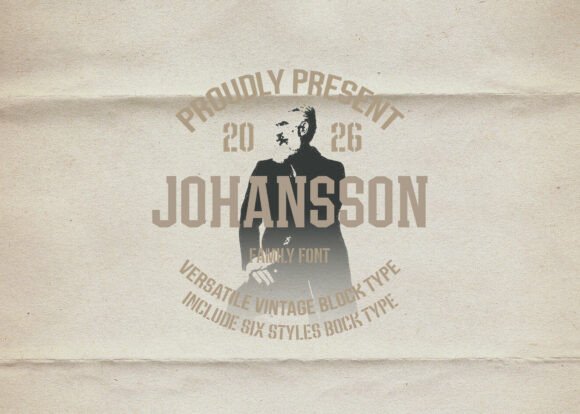
Furthermore, modern workflows demand versatility. The days of purchasing a single static font file are largely behind us. Designers now expect comprehensive families that can adapt across touchpoints. Johansson acknowledges this need by offering six distinct styles, ranging from pristine clean cuts to heavily weathered textures. This flexibility allows a brand to maintain visual consistency while adapting the tone for different contexts—using the clean version for legal text or small UI elements, and the weathered or shadowed versions for hero banners and packaging headers.
Practical Applications Across Sports, Retail, and Packaging
Versatility is the defining characteristic of a true utility player in typography, and Johansson excels in diverse commercial environments. Its heavy, squared-off forms naturally evoke the spirit of competition and tradition, making it a premier choice for sports branding. Whether designing jerseys for a local league or rebranding a university athletic department, the font’s collegiate roots provide instant legitimacy. It communicates power and team identity without relying on aggressive, jagged edges that can sometimes feel dated or overly hostile. Instead, it offers a dignified strength that ages well.
In the retail and hospitality sectors, particularly within the third-wave coffee movement and artisanal food markets, Johansson serves as a shorthand for quality. These industries rely heavily on shelf appeal and atmospheric branding. The font’s blocky proportions allow for tight kerning and impactful stacking, which is essential for product labels where space is limited but impact must be maximized. A jar of small-batch jam or a bag of single-origin beans benefits from the grounded presence of this typeface, which suggests that the contents are substantial and trustworthy.
For digital platforms, Johansson creates authoritative headers that command attention without shouting. In web design, where user attention spans are short, the immediate recognition of form is vital. The font’s high x-height and open counters ensure it remains readable even when scaled down for tablet or mobile views. Yet, unlike generic display fonts, it adds a layer of narrative depth to landing pages. It transforms a standard "About Us" section into a statement of heritage, reinforcing the brand's values through the very shape of the letters.
Mastering Contrast: Pairing Industrial Strength with Delicate Scripts
One of the most effective ways to leverage Johansson is through strategic contrast. Because the typeface is inherently heavy and structured, it acts as the perfect foil for lighter, more organic elements. The concept of "industrial-chic" relies on this tension between the manufactured and the handmade. Pairing Johansson with thin, hand-drawn scripts or elegant serifs creates a sophisticated hierarchy that guides the viewer’s eye and enriches the visual experience.
- Establish Hierarchy: Use Johansson for primary headlines and navigational anchors to ground the layout. Let the script or serif handle secondary information, captions, and accent text to introduce softness and approachability.
- Balance Texture: If utilizing the weathered or shadowed styles of Johansson, pair them with a clean, smooth script to prevent the design from becoming visually muddy. Conversely, the clean version of Johansson pairs beautifully with textured or rough-edged handwriting fonts.
- Contextual Tone: For a masculine or rugged brand identity, increase the weight difference between the block type and the accompanying font. For a more refined or unisex aesthetic, choose a script with moderate weight to soften the transition.
- Spacing Considerations: Allow ample negative space around Johansson when paired with intricate scripts. The density of the block letters needs room to breathe so the delicate details of the partner font are not lost.
This pairing strategy is particularly valuable for wedding stationery, boutique fashion, and lifestyle blogging, where the goal is to blend tradition with personal expression. The juxtaposition tells a story of balance: strong yet sensitive, historic yet current. It prevents the vintage aesthetic from feeling like a costume and instead integrates it into a cohesive, modern design system.
Why Timeless Utility Matters for Contemporary Creators
In a profession often obsessed with the new, investing in timeless tools is a strategic advantage. Trends expire quickly, forcing brands to undergo costly redesigns every few years to stay relevant. Johansson represents a sustainable design choice because its appeal is rooted in fundamental principles of form and function rather than temporary stylistic fads. The "golden age" of typography it references was defined by constraints that bred creativity and durability; applying those lessons today results in work that feels permanent.
For freelancers and agency professionals, having a reliable utility typeface in their arsenal streamlines the creative process. When a client requests a look that is "classic but not boring" or "strong but not aggressive," Johansson provides an immediate solution that satisfies both criteria. It reduces the time spent searching for the right display font and allows more energy to be focused on layout, color, and messaging. Its inclusion of multiple styles means fewer supplementary purchases are needed to achieve a complete typographic system.
Ultimately, the value of Johansson extends beyond its aesthetic qualities. It empowers creators to build identities that resonate on a deeper level with audiences who are tired of disposable culture. By stepping back into the golden age of typography, designers are not retreating from the future; they are equipping themselves with the visual language necessary to build brands that endure. In a world of infinite digital noise, the quiet confidence of a well-crafted block letterform speaks volumes. It is a testament to the idea that good design is not just about how something looks, but about how it makes people feel—and Johansson makes them feel secure, understood, and connected to something lasting.