Spooky Hospital: Strategic Application of Playful Display Typography
Selecting the right typeface is rarely just an aesthetic choice; it is a fundamental business decision that influences brand perception, user engagement, and communication efficacy. Spooky Hospital represents a specific niche in the typography landscape: a casual display font that successfully bridges the gap between modern simplicity and playful approachability. For entrepreneurs, marketers, and creators, understanding the strategic utility of this typeface goes beyond its visual charm. It requires analyzing how its clean shapes, soft edges, and balanced letterforms can serve functional roles in branding, packaging, and digital communication.
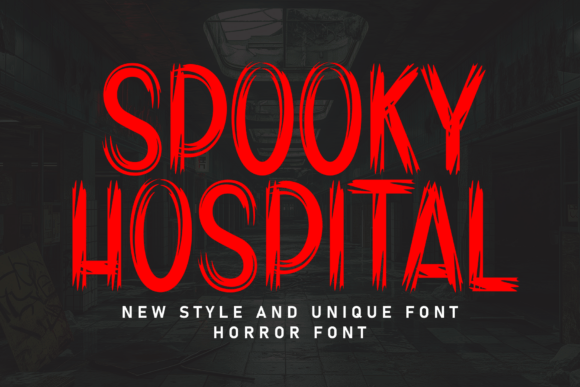
Unlike traditional horror-themed fonts that rely on jagged edges or distressed textures to convey fear, Spooky Hospital utilizes a relaxed design philosophy. This distinction is critical for decision-makers. It allows brands to tap into seasonal trends, niche aesthetics, or youthful energy without sacrificing readability or professional polish. When integrated intentionally, this font supports goals related to accessibility, emotional connection, and visual hierarchy, making it a versatile asset for projects ranging from social media graphics to product labeling.
Defining the Strategic Value of Relaxed Design
In a marketplace saturated with aggressive sans-serifs and overly ornate serifs, the value of Spooky Hospital lies in its approachability. From a psychological perspective, typography with soft edges and well-balanced proportions reduces cognitive load. Viewers process these shapes faster and associate them with safety, friendliness, and openness. For businesses operating in sectors that might otherwise feel intimidating—such as healthcare education, children’s products, or community events—this font acts as a visual softener.
The "casual display" classification indicates that Spooky Hospital is engineered for impact rather than extended reading. Strategically, this means it should be deployed to guide attention, not to deliver dense information. Its strength is in headlines, call-to-action buttons, and short-form messaging where personality must be established instantly. By leveraging its inherent charm, organizations can create touchpoints that feel human-centric rather than corporate, fostering trust before a single word of copy is read.
Balancing Personality with Professional Clarity
A common risk when adopting playful typography is the potential erosion of authority. However, Spooky Hospital mitigates this through its commitment to clean shapes and modern structure. It avoids the chaotic irregularities often found in novelty fonts. This balance makes it suitable for professional contexts where creativity is valued but clarity remains paramount. For example, a creative agency might use it for internal culture decks or recruitment posters to signal innovation, while a bakery might use it on packaging to emphasize artisanal warmth. The key is recognizing that the font’s "spooky" name is secondary to its actual visual output: legible, structured, and friendly.
Operational Use Cases and Implementation Planning
To maximize return on investment when licensing or deploying Spooky Hospital, teams must move beyond ad-hoc usage and integrate it into broader design systems. Random application dilutes brand equity; intentional application builds recognition. Below are high-value operational contexts where this typeface delivers measurable results.
- Social Media Engagement: In feed environments dominated by bold, shouting typography, the softer cadence of Spooky Hospital creates a pattern interrupt. It stops the scroll by offering visual relief. Use it for quote cards, announcement overlays, or story highlights where the goal is retention and sentiment rather than hard conversion.
- Packaging and Retail Signage: On physical shelves, readability at a distance is non-negotiable. The well-balanced letterforms of Spooky Hospital maintain integrity even when scaled up or printed on textured materials. It adds a fresh touch to labels without becoming illegible, supporting both shelf appeal and functional compliance.
- Event Branding and Merchandise: For festivals, pop-ups, or seasonal campaigns, this font provides instant thematic cohesion. Unlike generic Halloween fonts that expire on November 1st, its modern simplicity allows it to transition into general "quirky" or "retro" branding, extending the lifespan of your design assets.
- Educational and Youth-Oriented Content: Educators and publishers targeting younger demographics benefit from the font’s non-threatening geometry. It supports literacy and engagement by presenting text as inviting rather than academic, making it ideal for worksheets, book covers, and learning apps.
Technical Considerations for Production
Before finalizing Spooky Hospital for a project, conduct a technical audit. While it excels in display settings, test its rendering across all intended platforms. Soft edges can sometimes blur on low-resolution screens or when embroidered on textiles. Ensure you have access to multiple weights if available, or plan your layout to accommodate the single-weight nature of many casual display fonts. Pairing is equally important; combine it with a neutral, highly legible sans-serif for body copy. This contrast reinforces the hierarchy and ensures that the playfulness of Spooky Hospital enhances, rather than competes with, your core message.
Risk Management and Contextual Awareness
Every design tool carries inherent risks when misapplied. Understanding the limitations of Spooky Hospital is as important as knowing its strengths. Misalignment between typeface tone and content gravity can lead to audience alienation or brand confusion.
- Tonal Dissonance in Serious Contexts: Avoid using this font for crisis communication, legal disclaimers, financial reporting, or luxury positioning. The casual vibe can inadvertently trivialize serious subjects. If your primary goal is to convey stability, exclusivity, or urgency, a more traditional typeface is strategically superior.
- Overuse and Visual Fatigue: Because Spooky Hospital has distinct character, using it for subheads, captions, and navigation elements will degrade usability. Reserve it strictly for primary focal points. Over-saturation turns a unique asset into visual noise, reducing its effectiveness over time.
- Accessibility Compliance: Always verify color contrast ratios. Playful fonts often tempt designers to use pastel or low-contrast color palettes. Prioritize WCAG standards to ensure that the "friendly" aesthetic does not exclude users with visual impairments. Readability must never be sacrificed for style.
- Licensing and Scalability: Confirm that your license covers all intended commercial uses, including web embedding, app integration, and merchandise. A font that works perfectly for Instagram posts may require a different tier for enterprise software or mass-market retail packaging. Plan for scalability to avoid legal or operational bottlenecks as your project grows.
Making Informed Typography Decisions
The decision to adopt Spooky Hospital should be rooted in audience analysis and communication objectives, not merely personal preference. Ask whether your target demographic responds better to polished perfection or relatable imperfection. Does your brand voice lean toward authoritative expertise or peer-to-peer friendship? If the latter, this typeface serves as a powerful amplifier.
Consider the longevity of the project. Trends cycle quickly, but Spooky Hospital’s foundation in modern simplicity offers some protection against rapid obsolescence. It reads as contemporary rather than retro-revivalist, giving it a longer shelf life than purely nostalgic fonts. However, always build flexibility into your design system. Have a secondary display option ready in case market sentiment shifts or your brand evolves beyond the casual aesthetic.
Measuring Impact and Iterating
Treat typography as a variable in your performance testing. If using Spooky Hospital in paid ads or email subject lines, A/B test it against your standard corporate font. Measure click-through rates, time-on-page, and sentiment analysis in comments. Quantitative data validates qualitative assumptions. You may find that while the font increases engagement on awareness-level content, it underperforms on bottom-funnel conversion pages. These insights allow you to refine your usage guidelines, ensuring that every typographic choice contributes directly to organizational outcomes.
Ultimately, Spooky Hospital is a tool for differentiation. In an era where consumers crave authenticity and human connection, its blend of playfulness and clarity offers a strategic advantage. By applying it with discipline, respecting its technical boundaries, and aligning it with clear business goals, professionals can transform a simple display font into a cornerstone of effective visual communication. The result is design that doesn't just look good—it works hard to achieve tangible results.